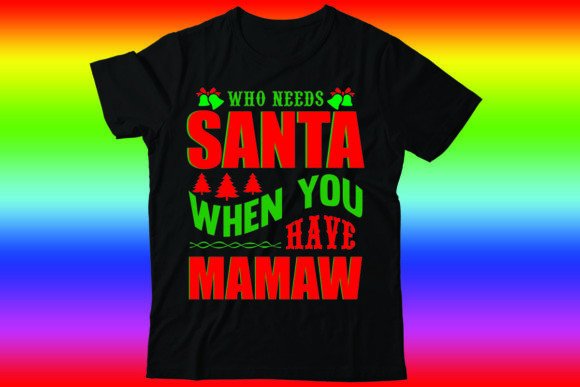
Who Needs Santa T-Shirt Designs: A Brand Review
As a brand designer and content marketer, I spend half my life squinting at pixels and the other half analyzing consumer psychology. When a client hands me a new graphic design asset, I do not just look at the aesthetics; I look for utility, emotional resonance, and scalability. Recently, I reviewed the "Who Needs Santa when You Have Mamaw" concept for a holiday campaign, and it struck a chord that goes far beyond simple seasonal decor. This piece is not just a cute phrase; it is a strategic tool for small business branding that taps into deep familial nostalgia.
The Emotional Hook and First Impressions
The first thing you notice about this design is its warmth. In a market saturated with generic red-and-green clipart, this asset offers a specific narrative voice. It speaks directly to the grandmother figure who is the true hero of the holiday season. For marketers, this is gold. It creates an immediate emotional connection, bypassing the coldness of transactional advertising. The mood is playful yet respectful, casual yet deeply affectionate. It feels perfectly suited for lifestyle content, handmade product promotions, and family-oriented editorial graphics. It does not scream for attention; it invites a smile, which is often more powerful in building audience trust.
Integrating the Asset into Real Campaigns
Let us frame this within a real-world scenario. Imagine a small boutique launching a limited-edition holiday collection. They need visuals that stand out on crowded social feeds. Here is how "Who Needs Santa when You Have Mamaw" performs across various channels:
- Social Media Graphics: On Instagram and Pinterest, this design works beautifully as a standalone quote graphic or overlaid on a cozy, candid photo of a grandmother and grandchild. It drives engagement because it is highly shareable among family groups.
- T-Shirt Designs: This is arguably the strongest application. As a central element for T-Shirt Designs, it appeals to gift-givers looking for personalized, meaningful apparel. It transforms a standard garment into a sentimental keepsake.
- Packaging Design: Use this illustration on hang tags or sticker seals for holiday gift boxes. It adds a layer of professional branding that feels bespoke and thoughtful, elevating the perceived value of the product inside.
- Digital Ads: In Facebook or Instagram ads, the clear typography and charming imagery create a strong visual hierarchy. The message is instant, reducing cognitive load for the scroller and increasing click-through rates.
Strategic Marketing Benefits
Why choose this specific asset over a generic snowflake or Santa icon? The answer lies in differentiation. Modern consumers crave authenticity. By using a design that celebrates a specific family role, you are signaling that your brand understands human connections. This supports several key marketing goals:
First, it strengthens brand identity. If your brand values family, tradition, and warmth, this asset reinforces those pillars visually. Second, it improves product presentation. When placed on a mug, tote bag, or shirt, the design becomes the focal point, making the product feel special rather than commoditized. Finally, it fosters memorable campaign visuals. People forget generic ads, but they remember content that makes them think of their own loved ones.
Where This Design Shines Brightest
To get the most out of this creative design, you must place it in the right context. It works best as a hero graphic for email banners announcing holiday sales. It is ideal for content bundles aimed at moms and grandmothers. Use it in Canva template kits for coaches and creators who want to add a personal touch to their December newsletters. It also excels in printable design formats, such as holiday cards or wall art, where the sentiment can be read and appreciated at a leisurely pace.
For web design, consider using it as a decorative element in the footer or as a background pattern with reduced opacity. It adds texture without overwhelming the user interface. In editorial design, such as blog headers for posts about gift guides or family traditions, it sets the tone immediately.
Cautionary Notes for Professional Use
While versatile, this asset is not a one-size-fits-all solution. As a designer, I advise using it carefully in certain contexts. Avoid placing it in formal corporate branding materials where the tone needs to be strictly professional and neutral. It may clash with overly minimal brands that rely on stark, abstract aesthetics. Furthermore, be cautious with dense information layouts. If you have a lot of text, let this design breathe. Do not crowd it.
Also, watch out for low-contrast backgrounds. If the design features light colors, ensure it is placed on a dark enough background to maintain readability. In small mobile graphics, test the legibility. If the details are too intricate, they may blur on smaller screens. Always prioritize clarity over decoration.
Practical Designer Notes for Implementation
Before you launch your campaign, run through this checklist to ensure visual consistency and quality:
- Test Color Palettes: Does the design harmonize with your existing brand colors? Try adjusting the hues to match your primary and secondary palette while keeping the contrast high.
- Check Black and White Usage: Print costs can add up. Ensure the design looks crisp and recognizable in single-color printing for cost-effective merchandise like stickers or simple tees.
- Mockup Reality: Place the asset inside real campaign mockups. See how it looks on a folded shirt, a curved mug, or a scrolling phone screen. Digital previews can be deceiving.
- Font Pairing: If you add supplementary text, choose wisely. This design pairs well with clean sans serif fonts for modern appeal or handwritten script fonts for added warmth. Avoid clashing display fonts that compete for attention.
- Licensing Verification: Always confirm the commercial license status. If you are using this for paid campaigns, client work, or products you intend to sell, you must have the right to use it commercially. Never assume a digital product from a creative marketplace is free for resale without checking the terms.
Final Verdict for Content Creators
In the world of content marketing, assets that tell a story are invaluable. "Who Needs Santa when You Have Mamaw" is more than just a festive illustration; it is a conduit for emotion. For online coaches, product creators, and digital sellers, it offers a way to humanize their brand during the hectic holiday season. It is a strong addition to any design bundle aimed at lifestyle and family niches.
Whether you are creating PNG design files for sublimation or SVG design vectors for cutting machines, this asset holds up under scrutiny. It balances charm with professionalism, making it a safe yet impactful choice for marketing visuals. By integrating this design thoughtfully, you can create campaigns that do not just sell products, but celebrate relationships. That is the essence of effective modern design—it connects people. And in the end, that is what builds a loyal community around your brand.